


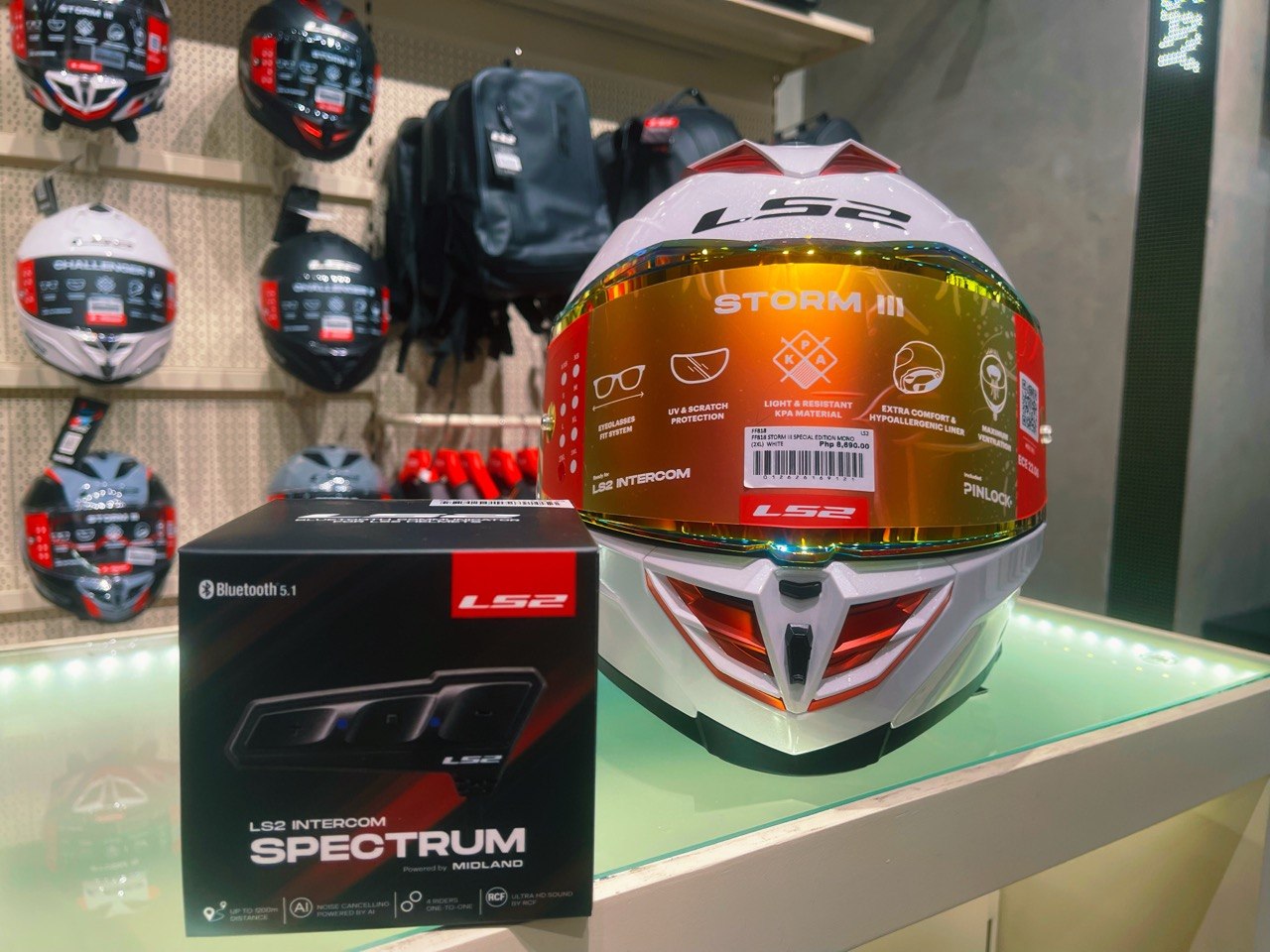
I’ve tried a few Bluetooth comm units over the years, and honestly, most of them feel like an afterthought. They’re made for “a helmet” in general, not made for your specific helmet. You buy the unit separately, then spend twenty minutes figuring out where the mount goes and whether the mic even reaches your mouth.
The LS2 Spectrum is different, because it’s built to fit LS2 helmets specifically. There’s no guesswork and no forcing a mount that doesn’t quite sit right. It’s designed around the helmet instead of being squeezed into it after the fact.
LS2 SPECTRUM
LS2 Spectrum: a helmet-specific Bluetooth communication system built to fit inside select LS2 helmets, with bass-heavy 40mm speakers, a clear noise-cancelling mic, and up to 20 hours of battery life.
- ✔ Strong bass and loud volume, even in a quiet store test
- ✔ Built specifically for LS2 helmets, fits into a slot inside the shell
- ✔ Very clear mic
- ✔ Long battery life — 20 hours rated
- ✔ Group connectivity for up to 4 riders on one channel
- ✖ Mount type unclear — adhesive-only
- ✖ Only connects up to 4 riders at once
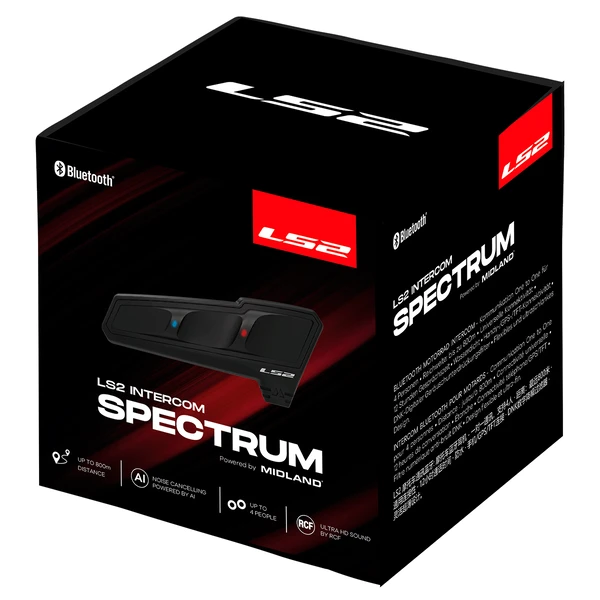
Full disclosure I haven’t taken this out on an actual ride yet. Everything below is from testing it in the store: pairing it, playing music through it, and talking through the mic with shop noise around me. Think of this as a first-impressions piece, not a full road review, and I’ll follow up once I’ve actually ridden with it.
The Speaker: Good Bass, Loud Volume
This is the part that surprised me the most, even just standing around in the shop. Most helmet speakers sound thin, enough to hear your Waze directions and not much else. That’s usually the trade-off with helmet audio, since there’s only so much room to fit a speaker inside the padding.
The Spectrum’s speakers actually have bass to them, which I did not expect from a helmet speaker. You can hear it, and you can genuinely feel it too. Whatever song I played, the low end stayed present instead of getting flattened out like it usually does.
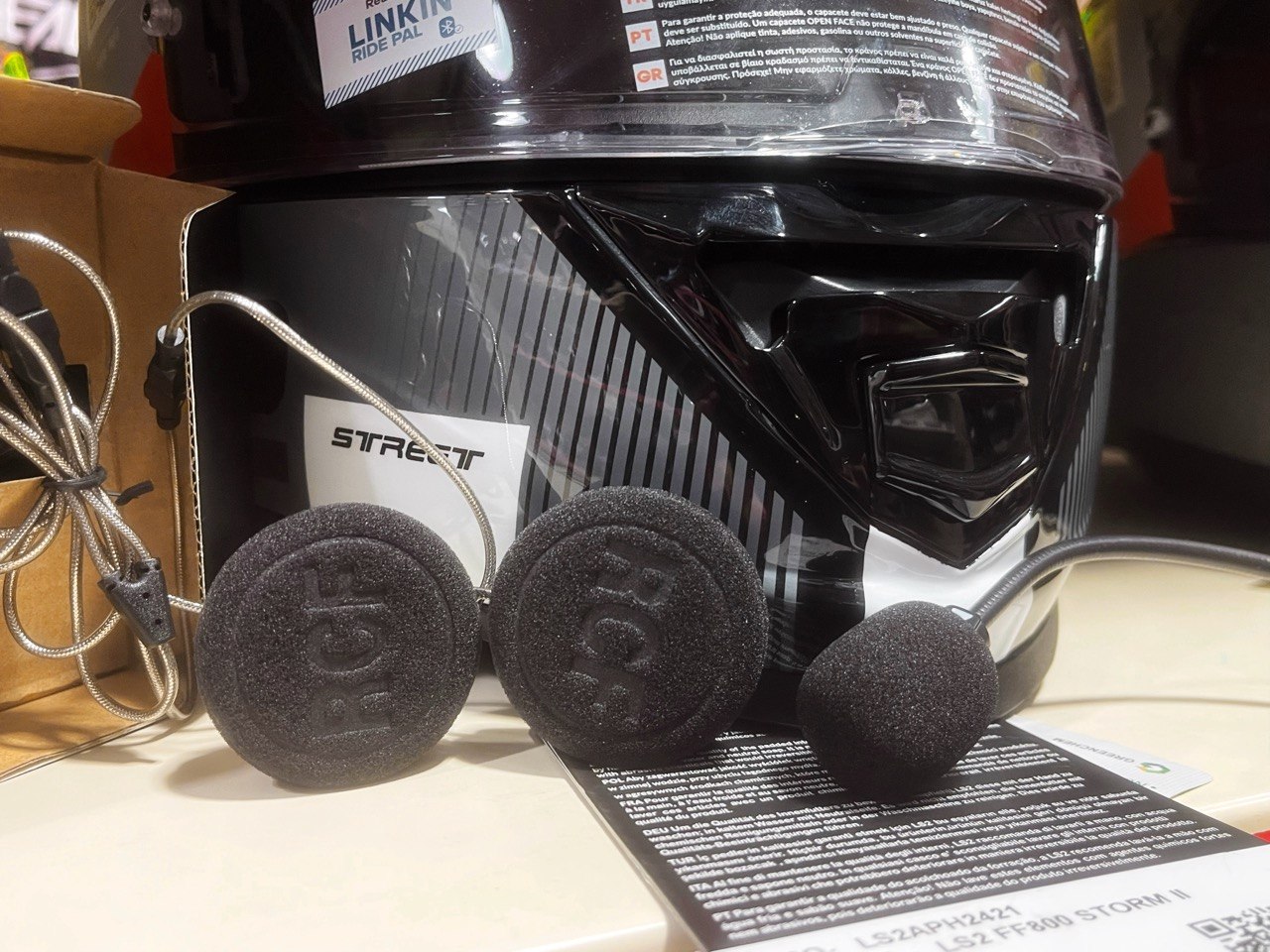
Overall volume is loud as well, which is a good early sign. It runs on 40mm RCF speakers and Bluetooth 5.1, with a claimed range of up to 1.2 kilometers between riders. A lot of comm units start sounding distorted once you push the volume up, and this one didn’t have that problem in the store.
The actual range and sound quality on the road are still a different test I need to run. That 1.2km figure is measured under ideal conditions, so the distance you actually get will likely be shorter with buildings, trees, or other riders in the way. Wind noise and highway speed will also tell me more than a quiet shop ever could.
LS2 Compatibility: Easy Fit, No Extra Work
This is the whole reason the unit exists, and it delivers. You don’t need to drill anything or build your own mounting setup. That’s usually the most annoying part of installing any aftermarket comm system.
With the Spectrum, you just remove a small section inside the helmet, since LS2 already built a slot for it. The unit fits right in without any improvising. Watching it slot into place in the store, it was clear this was planned from the start rather than added on later.
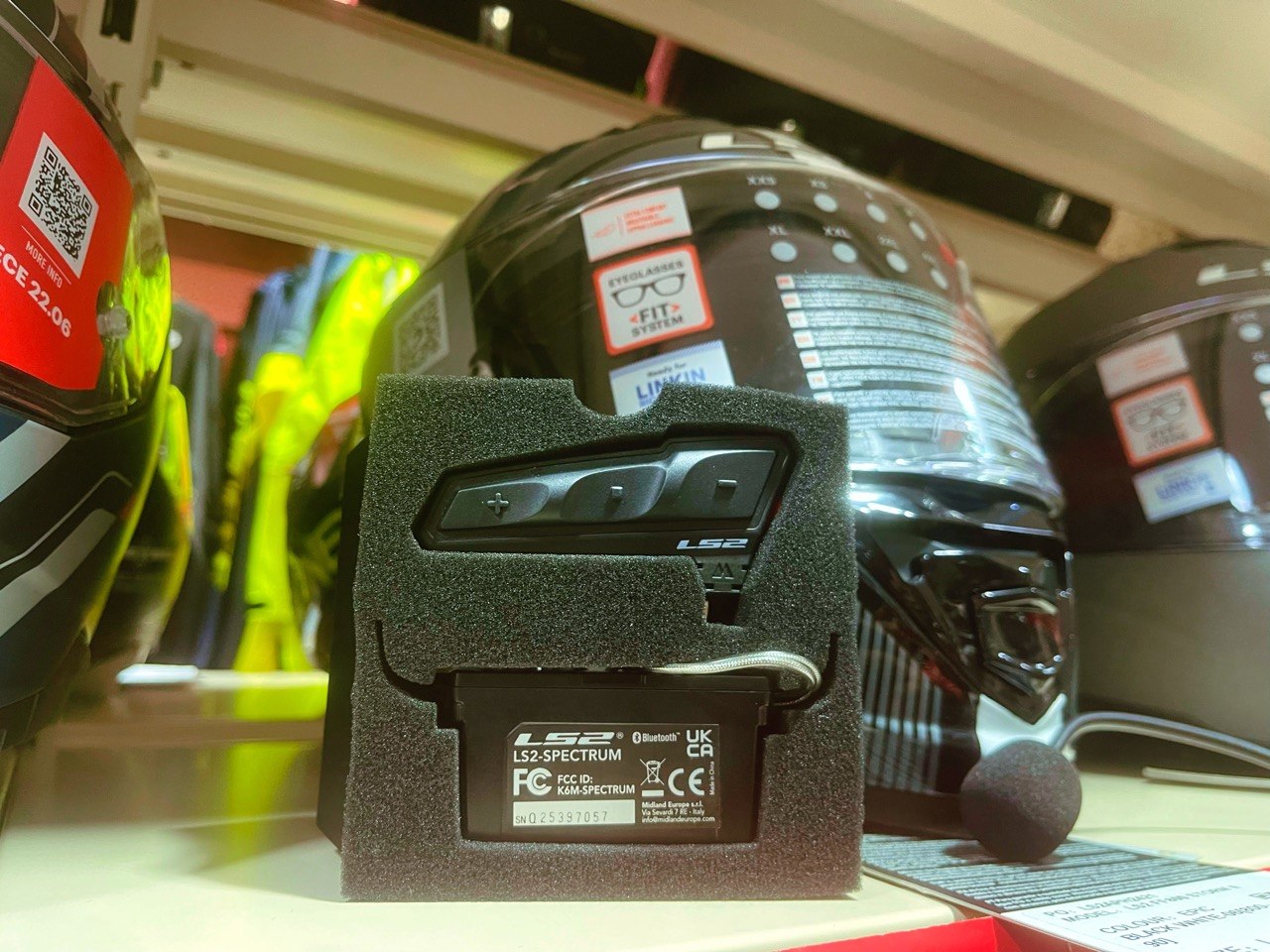
If you’re already riding an LS2 helmet, this removes basically all the hassle of installing a comm system. You’re not measuring anything or guessing where the speakers should sit near your ears. It just goes where it’s supposed to go.
Mic Clarity: Very Clear
This is the one I got to test properly, right there in the store with customers around and music blasting in the background. That kind of noise usually leaks into your calls and is one of the most common complaints with cheaper units. You end up shouting over your own bike or your own music, and the other person still can’t hear you well.
The Spectrum’s mic picked up my voice clean enough that the other person couldn’t tell there was loud music and people talking around me. That’s a strong result, since a busy store is genuinely noisy, not some quiet test booth. It shows the mic is actually isolating your voice instead of just picking up everything nearby.
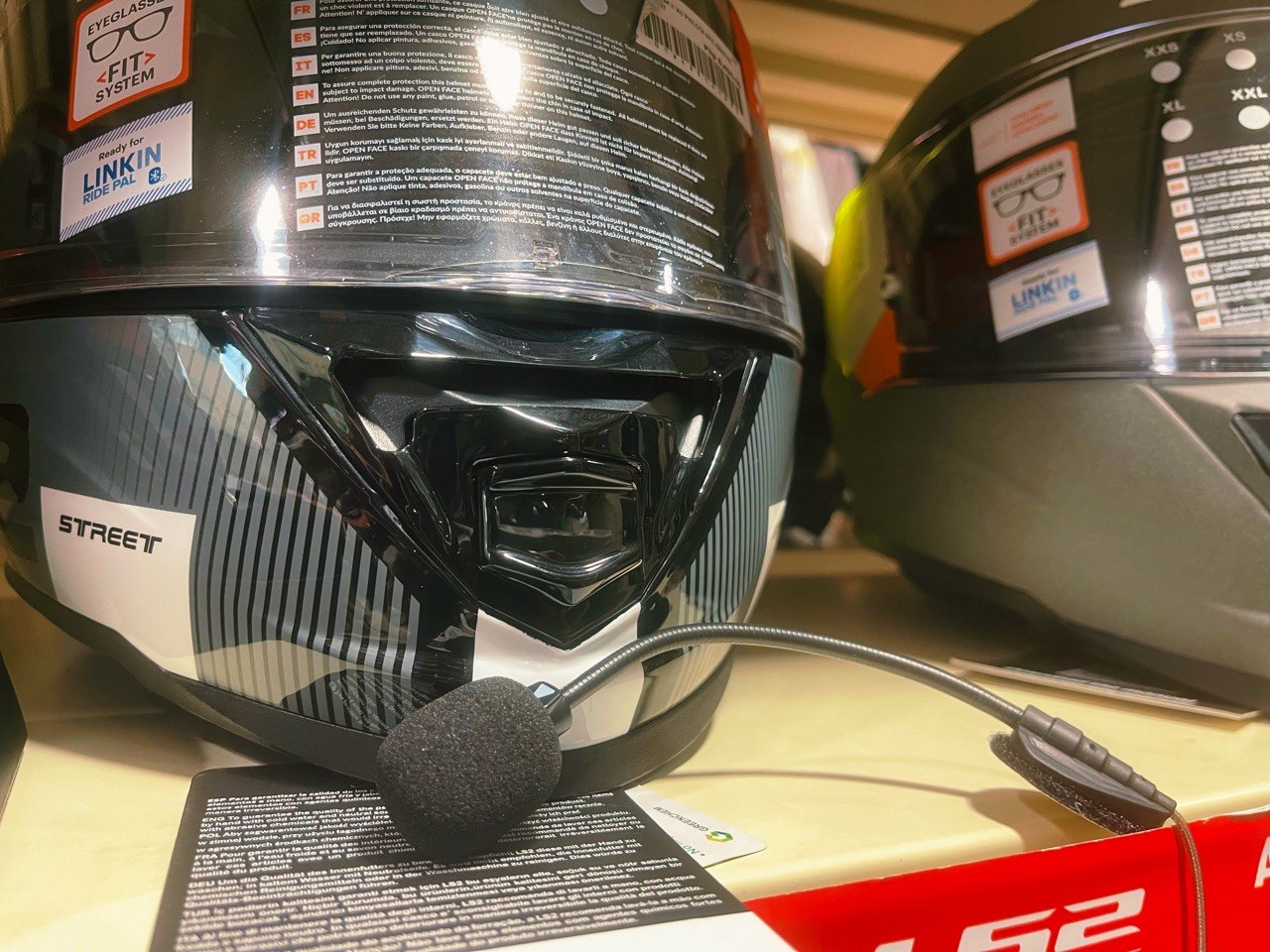
That’s the claim here I’m most confident will hold up, even with wind and traffic noise added in. Wind behaves differently from store music, so I still want to test it properly on the road. But based on what I heard, the foundation is clearly solid.
Battery: 20 Hours (According to the Spec Sheet)
The specs says 20 hours of battery life, which is great if it holds up in real use. Twenty hours is the difference between charging every single ride and only charging once a week. For anyone doing regular commutes plus weekend rides, that adds up fast.
Battery numbers on spec sheets are usually measured under ideal conditions. The number you actually get is often a bit lower once you factor in constant music, frequent mic use, or riding somewhere hot for hours. None of that is a knock against the Spectrum specifically, since it’s how battery claims tend to work across most comm units.
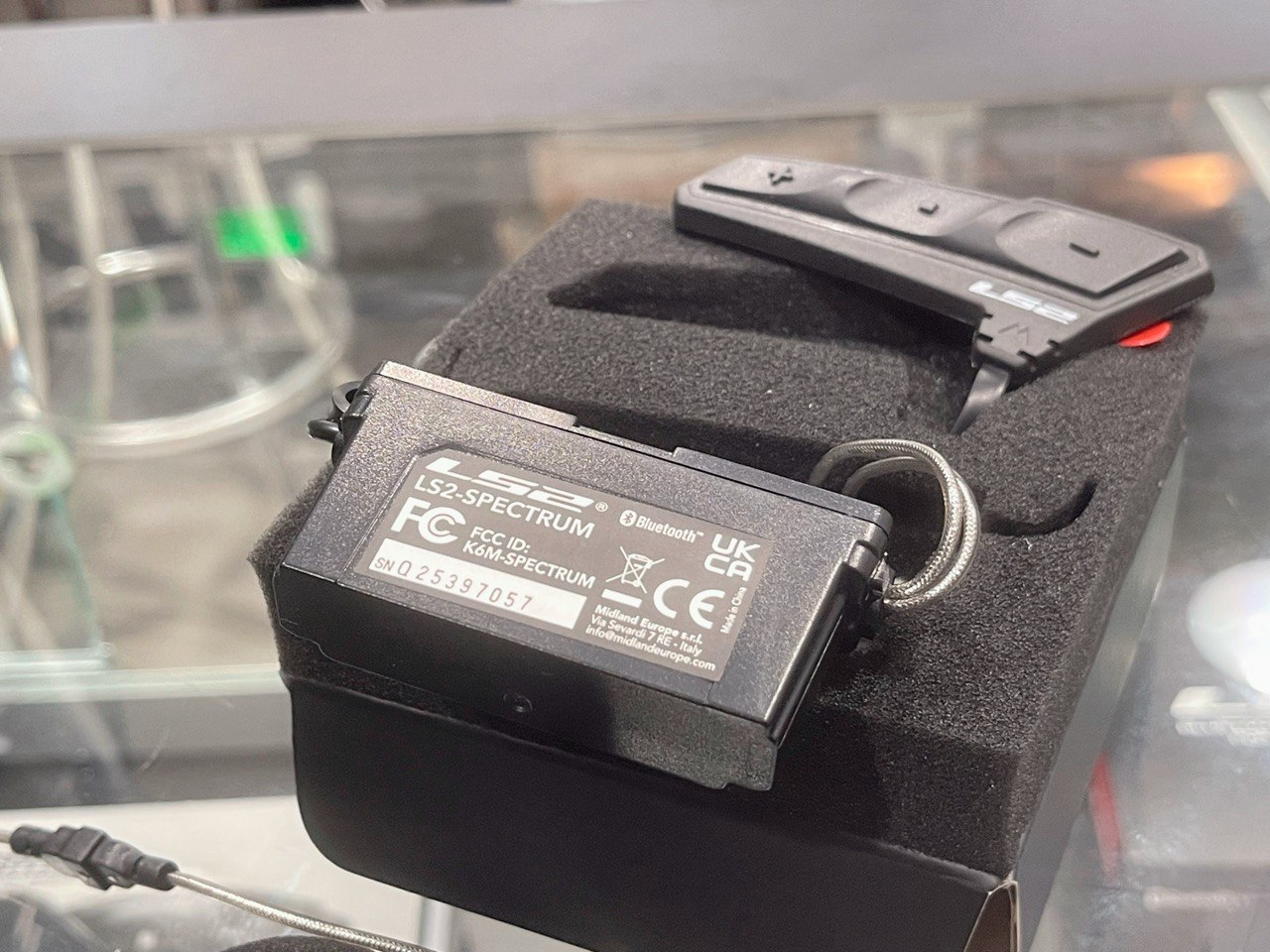
I haven’t ridden with it long enough yet to confirm this myself. For now, this is just the manufacturer’s number. I’ll update this once I’ve actually drained it across a few real rides, ideally a mix of short commutes and one longer trip.
Design & Build Quality
Even before turning it on, the Spectrum looks like it belongs on the helmet rather than sitting on top of it. The unit sits low and close to the shell once installed, without the bulky, bolted-on look that a lot of universal comm units have. It’s a small thing, but it matters if you care about how your helmet looks with the unit attached.
The buttons are easy to find by feel, which is the part that actually matters once you’re riding gloved and can’t look down. I tested the volume and pairing controls in the store without watching my hand, and they were positioned where a thumb naturally lands. The mount, whatever its exact type turns out to be, held the unit firmly in place with no wobble while I moved the helmet around.
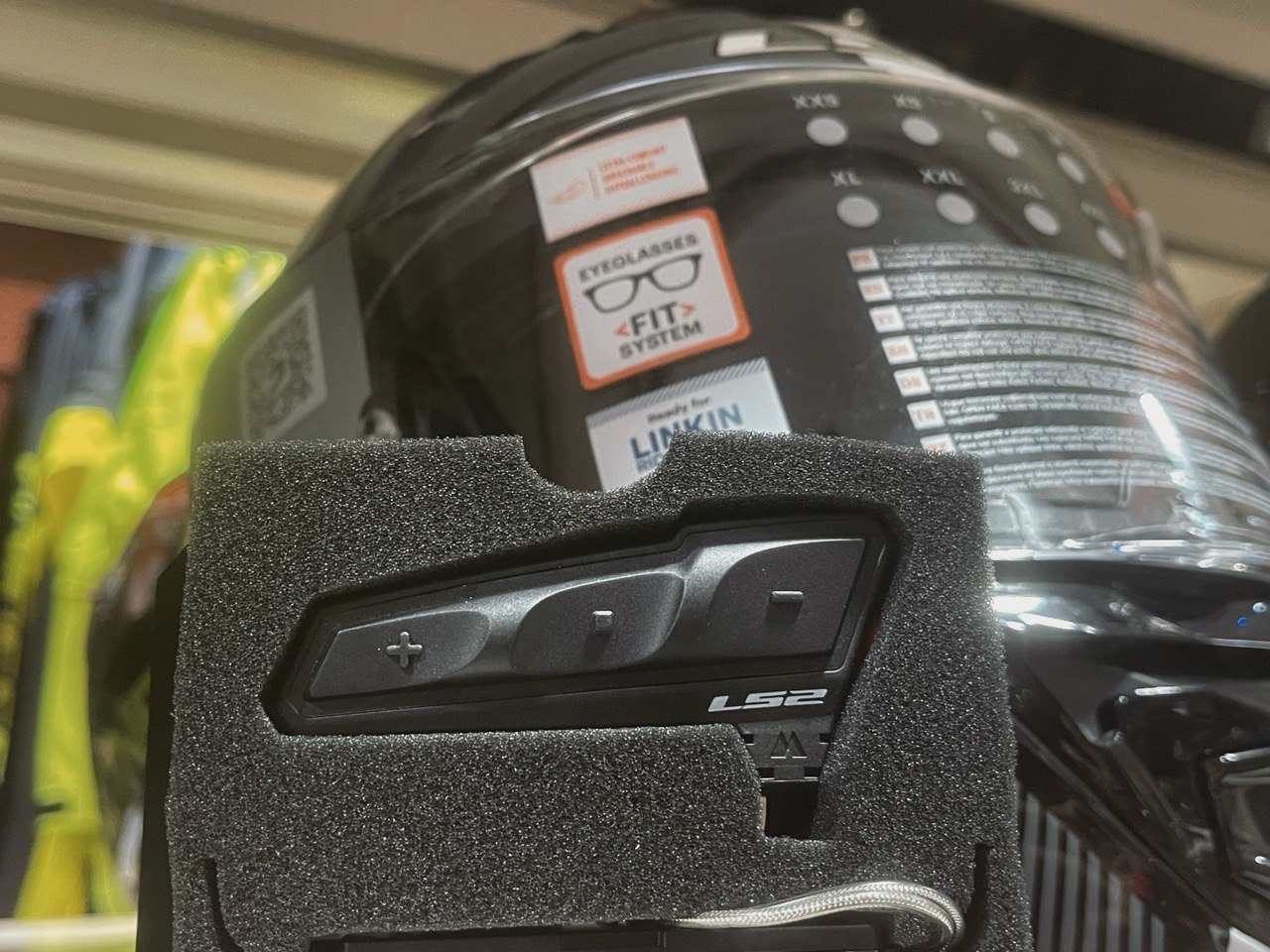
The overall finish feels solid rather than cheap, with no rattling parts or loose seams that I could find during the test. It’s the kind of build quality that suggests LS2 spent real effort designing this alongside the helmet. I still want to see how it holds up after actual use vibration, heat, and rain are a different test than standing still in an air-conditioned shop.
Bottom Line (For Now)
Based on the store test alone, the LS2 Spectrum looks like it solves the two biggest problems with aftermarket comm units: awkward fit and weak sound. The bass-heavy speakers impressed me even without wind noise working against them. The mic clarity held up well too, even with background noise to compete with.
The mount type, the 4-person connection limit, and the unconfirmed reconnect feature are open questions, not settled downsides. They’re the kind of details that only really show themselves after weeks of actual use, not a fifteen-minute test in a shop. I’d rather be upfront about what I don’t know yet than pretend I already tested it.
LS2 SPECTRUM
LS2 Spectrum: a helmet-specific Bluetooth communication system built to fit inside select LS2 helmets, with bass-heavy 40mm speakers, a clear noise-cancelling mic, and up to 20 hours of battery life.
- ✔ Strong bass and loud volume, even in a quiet store test
- ✔ Built specifically for LS2 helmets, fits into a slot inside the shell
- ✔ Very clear mic
- ✔ Long battery life — 20 hours rated
- ✔ Group connectivity for up to 4 riders on one channel
- ✖ Mount type unclear — adhesive-only
- ✖ Only connects up to 4 riders at once
This is a first-impressions verdict, not a final one. I’ll be testing it on an actual ride next, whether that’s EDSA traffic, an NLEX run, or a trip with the group. Once that’s done, I’ll come back and update every section here with what actually held up.
